CARTEL
"How many holders does this token have?" sounds like a simple question. In practice, two websites rarely give the same answer for the same token. This guide explains how MemesOnCronos counts holders, what you see on a token page while the count is being built, and why a block explorer can show a different number.
Our own count, read on the Cronos chain
MemesOnCronos does not take holder data from any outside service. It counts holders itself, from the chain:
- Find the token's creation block. Our engine looks it up once on the Cronos chain.
- Read every transfer since then. Each Transfer event of the token, from its creation to today, is read from the public Cronos nodes. Adding up the transfers gives the balance of every address.
- Keep reading new transfers as they happen, so the balances stay current.
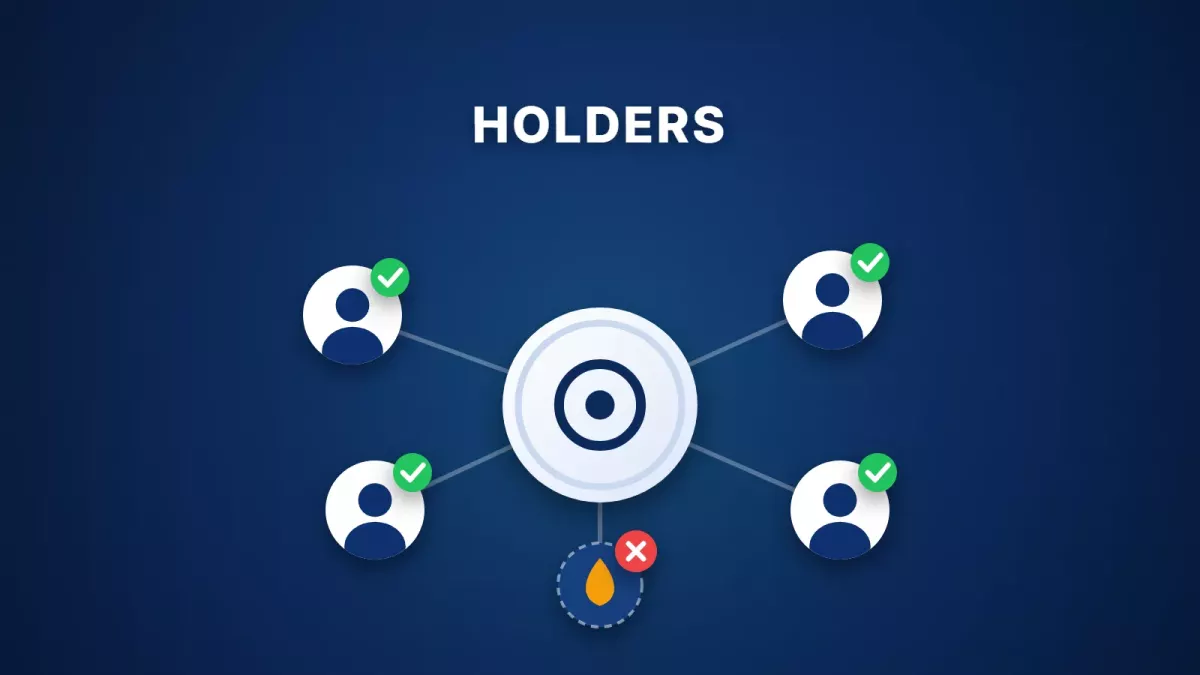
- Count the holders: every address with a balance above zero, with no minimum amount, leaving out the burn addresses (the zero address and
0x…dead), because nobody owns what they hold.
Note what this count includes: liquidity pools, the token contract itself, lockers and exchange wallets are addresses with a balance, so they count as holders like any wallet.
What you see on a token page
- Once the whole history is read, the token page shows the number of holders with the block it was read at: "Holders read on chain at block N". The block number links to the Cronos explorer, so anyone can check the moment of the count.
- While the history is being read, the page shows no number. It says "Counting holders on chain… N%", where N is the share of the token's history already read, from its creation block to the latest block. In the lists (home table, rankings), the holders column shows "—" for that token.
We never publish a count built from a partial history, and we do not fill the gap with a number from another source: until our own count is complete, there is simply no number. Old tokens with many transfers take the longest to read.
Why an explorer can show a different number
Different holder counts for the same token are normal. The usual reasons are about method:
- Time. A count is a snapshot. A count from last week and a count from today can differ by hundreds of holders on an active token. That is why our count always comes with its block.
- Rules. Each source decides what counts: whether burn addresses are included, whether very small balances are left out, how contracts are treated. MemesOnCronos counts every non-zero balance and leaves out only the burn addresses.
- Completeness. A count built from a partial history misses addresses. That is why we wait for the full history before showing ours.
For example, on November 14, 2026, the Cronos explorer showed about 46,811 holders for CorgiAI while our own count was still being built. Neither number is wrong in itself: they are taken at different times, with different rules.
What a holder count does and does not tell you
A high holder count shows that a token has spread widely, but it says nothing about how the supply is shared. One person can hold many wallets, airdrops create holders who never bought, and wallets with dust still count. Look at concentration too: the token page shows the share of the supply held by the 10 largest wallets, pools and burn addresses left out, and the timeline lists big holder moves.
Before you buy, read the full security report on the token page or run the free security scanner, and see What Is the MemesOnCronos Security Score. Meme tokens are very risky and you can lose everything you put in. Always do your own research. Nothing on MemesOnCronos is financial advice.
Sources: how MemesOnCronos reads transfers on the Cronos chain, as shown on its token pages; the Cronos explorer for CorgiAI, read on November 14, 2026.